Portuguese Ferry Timetables Skip Winter Schedules While Summer Boats Sail Half Empty

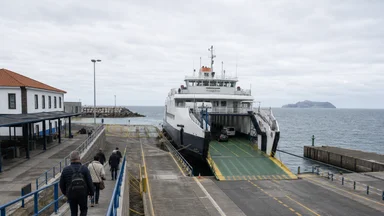
Every summer, the ferry terminals at Setúbal, Portimão, and Horta fill with travelers clutching printouts of July timetables. They have booked weeks ahead, paid peak fares, and braced for crowded decks. Then they board a boat that is half empty. The same traveler who returns in November finds the timetable shrunk to a single morning departure, if that. The mismatch is not an accident. It is the quiet logic of Portuguese ferry operators, who chase the July crowd and then close the books, leaving winter residents and off-season visitors to improvise. This article looks at why timetables vanish after October, why summer boats sail with empty car decks, and what a traveler can do about it.
The Summer Fleet Sails Half Empty While Winter Waits
On a typical July crossing from Setúbal to Madeira, the car deck might be a third full. The passenger lounge, even less. Operators still run the big ships, burn the fuel, and keep the crew on overtime because the assumption is that August will fill them. Sometimes it does. Often it does not. The result is a fleet that is over-provisioned for the peak and under-provisioned for the rest of the year.
Data from the Portuguese National Statistics Institute, as of late 2024, showed passenger numbers on domestic ferry routes peaking in July and August at roughly double the May or September figures. Yet the fleet capacity in those peak months is closer to triple the shoulder-season capacity. Operators add extra sailings, charter additional vessels, and extend the season by a few weekends. The extra supply does not always find demand. In July 2024, some sailings from the Azores' central group to Flores carried fewer than 40 passengers on ships built for 300.
Winter is the opposite. November sailings on many routes run once or twice a week, not daily. The ferry from Porto Santo to Madeira, which runs several times a day in summer, drops to a handful of weekly departures. The operator's own website may not even list the winter schedule until a few days before it takes effect. Travelers who assume year-round frequency find themselves stuck on an island for an extra night, or paying for a flight they had hoped to avoid.
Why Timetables Vanish After October
The official reason is demand. Operators say that after the summer rush, passenger numbers fall to a level that cannot justify daily sailings. Fuel costs and crew contracts are the real drivers. A ferry that burns heavy oil for a six-hour crossing costs the same whether it carries 50 passengers or 500. Crews are hired on seasonal contracts, and keeping them on the payroll through the quiet months is expensive. So the schedule shrinks.
But the demand drop is not as steep as the schedule suggests. The islands have winter residents who need to move goods, visit family, and attend to business. The Azores, Madeira, and the smaller islands of the Berlengas and the Selvagens all have year-round populations that depend on ferries. Operators do not ignore them entirely, but they run a minimum service that prioritizes cargo and essential travel over comfort. Passenger cabins may be closed, and the cafeteria may be shut, leaving travelers to bring their own food.
Online planners make the problem worse. Aggregator sites like Direct Ferries and Ferryhopper scrape the summer schedules and hold onto them long after they expire. A traveler in November might see a daily crossing that no longer exists. The operator's own website is more accurate, but it is often in Portuguese, and the winter timetable may be posted as a PDF that is easy to miss. The result is a traveler who plans around a ghost schedule.
The Half-Empty Summer Boat: A Case Study
Consider the route from Portimão to the island of Deserta, a popular day trip in the Algarve. In July, the operator runs three or four departures each way, with a capacity of around 200 passengers. Most days, the boats leave with maybe 60 people on board. The operator does not cancel the sailings because tourists might show up at the dock, and the cost of running the boat is already sunk. So the boat sails half empty, and the fare stays high.
Reservations are required on many summer sailings, but they are rarely filled. Tour operators block cabins and vehicle spaces speculatively, hoping to sell them as part of packages. When the packages do not sell, the spaces are released at the last minute. A walk-up passenger can often find a spot, even on a busy Friday in August. The idea that you must book weeks ahead is a myth that benefits the operators, who can charge a premium for the illusion of scarcity.
In the Azores, the summer schedule between São Miguel and Terceira runs twice a day, but the afternoon sailing is frequently less than a quarter full. The morning sailing, which connects with a flight arrival, is busier. The operator keeps the afternoon sailing because it is written into the published timetable, and canceling it would break the promise of a regular service. So it sails, empty decks and all.
What Guidebooks Get Wrong About Ferry Planning
Guidebooks are written in the summer, for the summer. They list the July schedule as if it were the year-round standard. They ignore the seasonal quirks of smaller lines, like the ferry from Vila Franca do Campo to the islet, which runs only when the sea is calm and the operator feels like it. They assume that English-language booking sites are updated in real time, when in practice they lag by weeks.
The bigger error is overstating the need to book ahead. For most Portuguese island routes, booking a few days in advance is plenty, even in July. The exceptions are the holiday weekends, like the Festival of the Sea in August or the Azores' Semanas do Mar in June, when boats fill up. But those are the exceptions. A traveler who books a month ahead for a random Tuesday in July is paying a premium for a seat that would have been available at the dock.
Guidebooks also miss the local alternatives. Cargo boats, like the ones that run from Lisbon to the Azores, carry passengers on a space-available basis. They are slower and less comfortable, but they are cheap and they run year-round. In the winter, when the passenger ferry is canceled, a cargo boat might be the only way off an island. The guidebooks do not mention them because they are not bookable online and they do not pay commissions.
Practical Workarounds for Off-Season Travelers
The first rule is to check the operator's own website, not an aggregator. The operator's site will have the current timetable, even if it is in Portuguese. Look for the word "horários" or "ligacoes". If the schedule is not posted, call the port office. The staff speak some English, and they know the real departure times, including the ones that are not online.
Arrive early. In the winter, boats may leave on demand, meaning they wait for the truck that is loading cargo or for the last passenger who is running down the dock. If you are not there, the boat leaves without you, and the next one might be three days away. A buffer of an hour is not excessive.
Consider flying. In the winter, flights to the islands are often cheaper than the ferry, and they run more frequently. A flight from Lisbon to Ponta Delgada takes about two hours and costs roughly the same as a ferry cabin, once you factor in the overnight stay you might need. For short trips, the plane is the practical choice.
Pack flexible plans. Weather delays are common in the winter, and a ferry may be canceled with no notice. A traveler with a flexible itinerary can ride it out. A traveler with a tight schedule will miss connections and pay for it. The same advice applies to the shoulder season, when the weather is better but still unpredictable.
The Hidden Costs of Rigid Schedules
A missed ferry connection in the winter means an overnight wait. The hotels near the port charge premium rates, and they fill up quickly when a sailing is canceled. A traveler who planned to sleep on the boat ends up paying for a room, plus meals, plus the stress. The cost of a flexible plan is a few hours of uncertainty. The cost of a rigid plan can be a hundred euros or more.
Rental cars sit idle at ferry terminals. A traveler who books a car for a week and takes the ferry to an island for three days pays for the car while it is parked. The rental companies do not offer a discount for the days the car is not driven. A better plan is to rent the car only for the days you are on the main island, and use public transport or a taxi on the islands.
Travelers pay for unused return legs. Many ferry tickets are sold as round trips, and the return leg is often non-refundable. If you decide to stay an extra day, you lose the return fare and pay for a new ticket. The operators count on this. A traveler who buys a one-way ticket and plans to buy the return later pays more per leg, but has the flexibility to change plans without penalty.
Ride the Shoulder Season for Empty Decks
May and September are the sweet spots. The weather is still fair for island hopping, with temperatures in the low 20s Celsius and calmer seas than in the winter. The ferries run a reduced schedule, but it is more frequent than in the winter, and the fares drop by roughly 20 to 30 percent compared to July. The boats are not full, and the operators are happy to see you.
Local festivals fill the boats in the shoulder season, but rarely to capacity. The Festas do Espírito Santo in the Azores, which run from May to September, draw islanders who travel between islands for the celebrations. The boats are busier than a random Tuesday, but they are not packed. A traveler who books a few days ahead is fine.
The trade-off is that the shoulder season schedule is less predictable. Some routes run only on certain days of the week, and the times may change at short notice. The traveler who wants the full summer schedule with the shoulder-season prices will be disappointed. The traveler who accepts the gaps and plans around them will find empty decks and lower fares, and a quieter version of the islands that the summer crowds never see.
The Economic Logic of Ferry Operators
To understand the ferry operators' behavior, it helps to look at their cost structure. A typical medium-sized ferry has fixed costs that do not change with passenger numbers: fuel for the crossing, port fees, insurance, and the crew's salaries. Variable costs, like food and cleaning, are relatively small. This means that once the decision is made to sail, the marginal cost of carrying an extra passenger is low, but the fixed cost of operating the ship is high. In the summer, the operator hopes that high demand will cover these fixed costs, but as we have seen, demand often falls short. In the winter, the operator cannot justify running the ship at all on many days, because the fixed costs would exceed the revenue from the few passengers who would show up.
This leads to a perverse incentive: the operator would rather run a half-empty ship in July than cancel a sailing, because canceling might damage the brand's reputation and lead to fewer bookings in the future. But in the winter, the operator has no such compunction, because the service is seen as a lifeline rather than a product. The winter schedule is designed to meet the minimum needs of islanders, not to cater to tourists. This is why the winter timetable often prioritizes cargo and essential travel, and why passenger amenities are reduced.
The result is a system that is inefficient for the operator and frustrating for the traveler. The operator spends money on fuel and crew in the summer for empty seats, and the traveler in the winter has to work around a schedule that seems designed to be inconvenient. But understanding this logic helps the traveler plan better. If you know that the operator's priority is to fill the summer boats, you can exploit the shoulder season, when the operator is still running a relatively full schedule but demand is lower. If you know that the winter schedule is a lifeline, you can plan around its limitations, using cargo boats or flights as backups.
Alternative Routes and Hidden Gems
While the main routes between the Azores and Madeira get most of the attention, there are smaller, less-known ferry services that offer unique opportunities for the off-season traveler. For example, the ferry from Faro to the Ilha da Armona, in the Ria Formosa, runs year-round, though with reduced frequency in the winter. This route is popular with locals who commute to work on the mainland, and it offers a glimpse of a less touristy side of the Algarve. In the winter, the boat is almost empty, and the island's beaches are deserted, making it a peaceful escape.
Another option is the ferry from Peniche to the Berlengas island, which runs from May to September, but also operates on weekends in the spring and fall. The island is a nature reserve, and the ferry is the only way to get there. In the shoulder season, you might have the island almost to yourself, but you need to check the schedule carefully, as it is subject to weather conditions. The crossing is short, but the sea can be rough, so it is not for everyone.
For the more adventurous, there is the possibility of catching a ride on a fishing boat or a private vessel. This is not something you can plan in advance, but if you are flexible and willing to ask around, you might find a local who is heading to a nearby island and is happy to take a passenger. This is not a reliable option, but it is a way to experience the islands from a different perspective, and it is often free or very cheap.
Finally, consider the timing of your trip. The shoulder season in Portugal is not just May and September; it also includes the weeks around Easter and the national holidays. During these periods, the weather is often good, and the ferries run on a schedule that is close to the summer one, but with fewer crowds. The key is to avoid the peak weeks, like the Festival of the Sea in August, when the boats are full and the prices are at their highest.
The Role of Weather and Sea Conditions
Weather plays a crucial role in ferry operations, and it is often underestimated by travelers. In the winter, the Atlantic can be rough, and ferries are frequently canceled or delayed due to high seas. This is not just an inconvenience; it can be a safety issue. Operators have a responsibility to their passengers and crew, and they will not sail if conditions are dangerous. This means that even if the schedule says there is a crossing, you cannot be sure it will happen until the day before, or even the day of.
The shoulder season is a compromise. The weather is generally better than in the winter, but it is still unpredictable. A sudden storm can disrupt plans, and a calm morning can turn into a rough afternoon. The traveler who is flexible and has a backup plan will be fine, but the traveler who has a tight itinerary may find themselves stranded. It is always a good idea to have a buffer of at least a day or two in your schedule, especially if you are island hopping.
In the summer, the weather is usually stable, and cancellations are rare. But even in July, there can be days when the sea is too rough for the smaller ferries, like the one to the Berlengas. The operators will usually offer a refund or a transfer to a later sailing, but it is still a disruption. The best approach is to check the weather forecast before you book, and to be prepared to change your plans if necessary.
For those who are prone to seasickness, the shoulder season can be a better time to travel, as the seas are calmer than in the winter, but not as calm as in the summer. The larger ferries are more stable, and the crossing times are shorter, so even if you are sensitive, you may be able to manage. If you are worried, you can take medication or use acupressure bands, but the best advice is to choose a route that is known to be sheltered, like the crossing from Setúbal to Madeira, which is less exposed than some of the Azores routes.
Conclusion
No schedule is perfect. The Portuguese ferry system is built for the summer, and it shows. But the traveler who understands the logic of the timetable, who checks the operator's site, and who builds in a little slack can ride the shoulder season with ease. The boats are not full, the prices are lower, and the islands are no less beautiful for being quiet.