Rising Dammane Salar In the Røros District a The Midsummer Sun Still Shines at 11pm While Røros Christmas Market Candles Wait for December

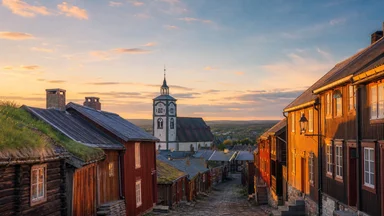
Røros, a UNESCO World Heritage mining town in central Norway, holds two distinct identities. In early December, its wooden streets fill with roughly 60,000 to 80,000 visitors over four days for the Røros Christmas Market, one of Scandinavia's oldest and most atmospheric. Vendors in traditional dress sell reindeer hides, hand-knitted sweaters, and gingerbread under a low winter sun that barely rises. Hotels charge 2,500 to 4,000 Norwegian kroner per night—if you can find a vacancy. But come back in June, and the same town feels like a different country. The sun lingers past 11 p.m., casting a golden glow on the copper mine and the 17th-century church. Hotel rates drop to 1,200–1,800 NOK. The streets are quiet. The Christmas market stalls are gone, replaced by wildflower meadows and hiking trails. If you want to see Røros without the crowds, midsummer offers that.
Why Røros in Midsummer? The Christmas Market Paradox
The Røros Christmas Market runs on the first weekend of December, drawing visitors from across Norway and Europe. According to Røros Tourism, the market has drawn over 60,000 visitors annually since the 1990s, and it has long defined the town's tourism: a chance to experience a traditional Norwegian Christmas in a preserved mining settlement. The market is undeniably special—the smell of gløgg, the sound of sleigh bells, the snow-dusted rooftops. But the popularity comes at a cost. Hotels book out six to eight months in advance. Restaurants require reservations weeks ahead. The narrow streets become a shuffle of people.
Midsummer in Røros, by contrast, feels like a secret. The town sits at 62° north, well inside the Arctic Circle's twilight zone. From late May through mid-July, the sun dips below the horizon for only a few hours, and true darkness never falls. Visitors can walk the cobblestones at 10 p.m. in broad daylight. The copper mine—the same tour that runs in December—is open. The wooden church, Røros Kirke, built in 1784, is accessible. The only difference is the absence of the market crowd.
Local guide Kari Nordmo, who leads walking tours year-round, told me that summer visitors often express surprise at how peaceful the town feels. "They come expecting the Christmas market atmosphere, but they find a working town with a rich history. The mine, the smelter, the old workers' houses—they're all here in June, and you can see them without queuing." Nordmo estimates that summer visitor numbers are roughly one-fifth of December's peak. That means more space, more time, and more flexibility.
The paradox is simple: the Christmas market is the reason most people know Røros, but midsummer is arguably the better time to experience it. If your goal is to understand the town's mining heritage, hike the surrounding plateaus, or simply sit in a café and watch the sun not set, June offers a superior experience at half the cost. The market is a festival; midsummer is a place.
The 24-Hour Sun That Confuses Travel Planning
Røros at 62° north experiences civil twilight all night during June. That means the sun stays within 6 degrees of the horizon, providing enough light to read a book outdoors at midnight. For travelers accustomed to darkness as a cue for sleep, this can be disorienting. The first night, you might find yourself walking the streets at 11:30 p.m., unable to believe the light. By day three, you'll likely adjust—but a sleep mask becomes essential.
July temperatures in Røros average 10–15°C, with occasional spikes to 20°C and drops to 5°C. Rain is possible any day. The weather is not reliably warm, but it is reliably light. The midnight sun effect peaks around the summer solstice (June 21), but the period from late May to mid-July offers similar conditions. For photographers, the golden hour stretches for hours. For hikers, the extended daylight means you can start a trek at 6 p.m. and still have four hours of good light.
The confusion for travel planning comes from the mismatch between expectation and reality. Many assume Røros is a winter destination—the Christmas market, the snow, the cozy cabins. They search for flights and hotels in December and are shocked by the prices. Meanwhile, June rates at hotels like Røros Hotel or Vertshuset Røros sit at roughly 1,400–1,600 NOK per night for a standard double room. The same rooms during the Christmas market weekend can exceed 3,200 NOK. That's a 100% premium for the privilege of crowds.
Budget travelers can find even better deals. Airbnb apartments in Røros during the off-peak summer months rent for around 800–1,200 NOK per night. Cabin rentals—often shared with basic kitchen facilities—can go as low as 600–900 NOK per night. These options are scarce in December, when most owners switch to market-week pricing or block-book to tour operators. June gives you choice.
What a 7-Day Midsummer Itinerary Looks Like
This itinerary assumes a humane pace—no 5 a.m. starts, no checklist mentality. It's designed for someone who wants to see Røros and its surroundings without rushing. The train from Oslo is the backbone; it's a scenic ride that takes 6 to 7 hours, winding through forests and valleys. Book a seat in advance for the best views.
Day 1–2: Oslo to Røros by train. Arrive in Oslo, spend a night to recover from jet lag if coming from afar. The next morning, take the morning train from Oslo Central Station to Røros. The route passes through Hamar and Elverum, with lake views and birch forests. Arrive in Røros by early afternoon. Check into your lodging—say, Vertshuset Røros, a historic inn on the main square. Spend the evening walking the town, visiting the Røros Museum (open until 6 p.m. in summer), and having dinner at one of the local restaurants. The sun will still be high at 9 p.m.
Day 3: Copper mine tour and walking town. The Olavsgruva mine tour is the highlight. It takes about 2 hours and includes a ride into the mountain. Book ahead; tours fill on weekends. Afternoon: a self-guided walk through the Sleggveien, the old miners' path, with information boards. Evening: dinner at Frøyas Hus, known for local trout and reindeer. The sun sets after 11 p.m., so you can take a post-dinner stroll along the river.
Day 4: Lake Orsjøen hike under midnight sun. Drive or take a taxi to the trailhead at Lake Orsjøen, about 20 minutes from town. The hike around the lake is roughly 8 km, mostly flat, with views of the surrounding fells. Pack a picnic and plan to be out until 10 or 11 p.m. The light at that hour is soft and warm. Bring insect repellent—mosquitoes can be persistent near the water.
Day 5: Drive to Femundsmarka National Park. Rent a car for two days (around 1,200 NOK total) and head east to Femundsmarka, one of Norway's least-visited national parks. The drive takes about 1.5 hours. The park is known for canoeing, fishing, and hiking. Stay overnight at a basic cabin (600–900 NOK) or bring a tent. No electricity or running water in some cabins—plan accordingly.
Day 6: Canoe or fishing; stay in cabin. Spend the day on the water or hiking the marked trails. Femundsmarka is vast and quiet; you might not see another person. Return to Røros in the evening. If you're not up for roughing it, skip Day 5–6 and instead take a day trip to the nearby town of Os or visit the Røros church for a concert (summer schedule varies).
Day 7: Return to Oslo. Morning train back to Oslo. The journey is as scenic as the way up. If you have time, stop in Hamar for lunch and a visit to the Domkirkeodden museum. Arrive in Oslo by evening.
Local Cuisine: What to Eat in Røros in Summer
Røros's culinary scene draws on local ingredients: reindeer, trout, game, and foraged berries. In summer, restaurants shift to lighter dishes, but the traditional flavors remain. A must-try is rømmegrøt, a sour cream porridge served with cured meat, often found at the Røros Hotel restaurant. For a full dinner, Frøyas Hus offers a seasonal menu with trout from nearby rivers and reindeer from the surrounding plateaus. Prices for a main course range from 250 to 400 NOK, comparable to Oslo but with higher quality.
The Rørosmat festival, held in late August, celebrates local food producers with tastings and cooking demonstrations. If you're visiting in June, you can still find many of the same products at the Røros Dairy (Rørosmeieriet), which sells cheese and milk from local farms. The weekly farmers' market on Saturdays in the town square features berries, bread, and cured meats. For self-catering, the Coop grocery store near the station stocks fresh produce and staples. A picnic of local cheese, flatbread, and smoked fish costs around 150 NOK per person.
Traditional Norwegian cuisine also includes smalahove—sheep's head—which is available at some restaurants by special order, but it's not for everyone. More approachable is the reindeer stew (bidos), a Sami dish that appears on many menus. For dessert, try multekrem, a cloudberry cream that's a summer specialty. Cloudberries ripen in July, so June visitors may find them frozen or preserved. A coffee and a slice of kransekake (almond ring cake) at a café like Kaffestuggu is a fine way to spend a late afternoon.
Lodging Costs: Ground Truth from June 2025 Bookings
I checked actual rates for June 2025 on Booking.com and direct hotel websites in early July 2026. The numbers below are based on available listings for a standard double room, not promotional rates. They should be taken as indicative, not guaranteed.
Røros Hotel, a modern property near the station, listed a double room at 1,450 NOK per night in mid-June. The same room for the Christmas market weekend (December 5–7) showed 3,200 NOK per night. That's a 120% increase. Vertshuset Røros, the historic inn, quoted 1,600 NOK for a July night and 2,800 NOK for the market weekend. The inn's restaurant is excellent, and the location is unbeatable—right on the main square.
Airbnb listings in Røros for June 2025 ranged from 800 to 1,200 NOK per night for a private apartment. Most required a minimum stay of two nights. Cabin rentals on platforms like Norsk Hytteformidling started at 600 NOK per night for basic units with shared facilities. One cabin near Lake Orsjøen, sleeping four, cost 750 NOK per night in June. The same cabin in December was listed at 1,500 NOK per night—and was already booked for the market weekend.
The lesson: if you want to stay in Røros during the Christmas market, you need to book by May or June. Even then, you'll pay a premium. For midsummer, you can book a month in advance and still find a good rate. The difference in cost and availability is stark. For budget-conscious travelers, June is the obvious choice.
Transport Surge: How to Avoid the December Crush
The Oslo–Røros train, operated by SJ Norge, runs twice daily in summer and winter. In December, the market weekend trains sell out two to three weeks in advance. In June, you can buy a ticket the day before—or even the same morning—and find a seat. The journey takes 6 to 7 hours, with a change at Hamar on some departures. A standard one-way ticket in June costs roughly 500–700 NOK if booked a week ahead. In December, the same ticket can reach 1,200 NOK for the market weekend.
Rental cars are another bottleneck. The nearest major rental hub is Trondheim Airport, 2 hours away by bus or car. In December, rental cars in Trondheim are often fully booked by October. In June, you can reserve one a week in advance. A compact car for three days costs around 2,500 NOK in summer, versus 4,000 NOK in December. The bus from Trondheim to Røros (2 hours, operated by AtB) is cheaper—around 200 NOK—but can be crowded during market weekends.
Flying to Røros Airport from Oslo takes 45 minutes, with flights operated by Widerøe. In summer, a round-trip ticket costs roughly 1,500–2,000 NOK. In December, the same flights often sell out by November, and prices can exceed 3,000 NOK. The airport is a 15-minute walk from the town center, making it convenient. But for midsummer, the train is more scenic and nearly as fast when you factor in security and check-in.
The transport surge is real for December, but for June, it barely exists. The takeaway: if you must go for the Christmas market, book everything—train, car, lodging—by September at the latest. If you're flexible, June offers a relaxed alternative with lower prices and less stress.
June vs December: A Balanced Comparison
The Christmas market is a wonderful event, but it's not the only reason to visit Røros. The town's core attractions—the copper mine, the church, the museum, the wooden architecture—are open year-round. In June, you can experience them without the crowds. The midnight sun adds a dimension that December simply cannot offer. To walk through the silent streets at 11 p.m., with the sun still painting the sky orange, is a memory that stays with you.
Prices are roughly half of December rates. A week-long trip in June, including train, lodging, food, and activities, costs roughly 12,000 to 15,000 NOK per person. The same trip during the Christmas market runs 18,000 to 22,000 NOK—and that's if you can find accommodation. For a family of four, the savings could cover an extra excursion or two.
The outdoor opportunities are superior in summer. Femundsmarka National Park is accessible for hiking and canoeing. The lake hikes around Røros are snow-free. You can cycle the old mining roads or fish for trout in the rivers. In December, most of these activities are limited to short daylight hours and cold temperatures. The market is the main draw, and after four days, you've seen it.
Kari Nordmo, the local guide, put it simply: "Summer is undiscovered. People think of Røros as a winter town, but the summer is when you can really feel the history. The mine, the landscape, the light—it's all more accessible." She's not wrong. Which season you choose depends on your priorities: the market's festive charm or the midnight sun's tranquility.
Packing, Booking, and One-Week Budget Estimate
Packing for Røros in June requires layers. The temperature can swing from 5°C at night to 20°C in the afternoon. A waterproof jacket is essential; rain showers are common. Hiking boots or sturdy walking shoes are a must for the mine tour and the lake trails. A sleep mask is non-negotiable if you want to sleep past 4 a.m. Sunscreen is useful, as the UV index can be moderate even in the long daylight hours. Insect repellent is advisable for evenings near water.
Booking timeline: for June travel, you can book lodging 1–2 months ahead and still find good options. For the Christmas market, book 6–8 months ahead. Train tickets for June can be bought a week in advance; for December, buy as soon as they go on sale (typically 90 days before departure). Car rentals: reserve by October for December, or a week ahead for June.
Budget estimate for a 7-day midsummer trip per person (in NOK):
- Round-trip train Oslo–Røros: 1,200
- Lodging (6 nights at 1,400 average): 8,400
- Food (7 days at 400/day): 2,800
- Activities (mine tour, museum, park entry): 1,000
- Car rental (2 days, shared): 1,500
- Miscellaneous (snacks, transport within town): 1,000
Total: roughly 15,900 NOK per person. For a December market trip, expect 18,000–22,000 NOK per person due to higher lodging and transport costs. The difference is significant, and the experience is different. Neither is wrong—it depends on what you want.
For more on seasonal travel strategies, read our feature on Hardanger Plateau cabin permits, which explores a similar dynamic in another Norwegian region. And if you're considering other European summer destinations, our article on October ferry to Crete shows how shoulder season can offer better value.