One Payday Loan Contract That Collects Interest After the Principal Is Repaid

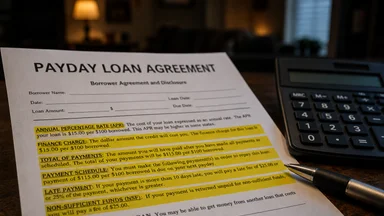
When a borrower pays off a $500 payday loan three days early, they might assume the debt is settled. The online lender deducts the full principal plus a $75 fee from the bank account. But a month later, another $45 charge appears. When the borrower calls customer service, a representative explains that the loan contract contains a clause allowing the lender to continue accruing interest on the unpaid balance—even after the principal has been repaid. The extra $45, they are told, is interest on the interest that accrued during the loan term but was not collected at payoff. This is not a glitch. It is a contractual feature that, while rare, is entirely legal in many states.
The practice sits at the intersection of consumer credit and regulatory gaps. Payday loans are already among the most expensive forms of borrowing in the United States, with annual percentage rates that can exceed 400 percent. But the post-repayment interest clause adds a layer of cost that even financially literate borrowers often miss. This article follows the money: how the clause works, why it exists, who profits, and what policymakers are doing about it.
The Contract That Keeps Paying After You Think You're Done
The core of the problem is straightforward: a borrower repays the principal in full, yet the loan contract continues to generate interest charges. In the contracts that include this clause, interest is calculated on a daily or periodic basis and is not fully satisfied until the lender says it is. The fine print typically reads something like: "Interest continues to accrue on the outstanding balance until all amounts due, including accrued but unpaid interest, are paid in full." This language sounds innocuous, but it creates a situation where a borrower who repays early or on time may still owe money.
The Consumer Financial Protection Bureau (CFPB) has received thousands of complaints about this practice. In a 2023 report titled "Online Payday Loan Practices: Interest Accrual After Repayment," the agency noted that roughly 12 percent of online payday loans examined involved post-repayment interest charges. The complaints describe borrowers who paid off their loans only to receive collection calls weeks later. One borrower in Texas reported being charged an additional $300 over three months after she had already repaid the $400 principal.
Lenders defend the clause as a form of risk pricing. They argue that the interest that accrues between the last statement and the payoff date is legitimate, and that the clause simply ensures they are compensated for the time value of money. "Our contracts are transparent," said a spokesperson for one online lender that uses the clause. "Borrowers agree to the terms when they sign." But consumer advocates counter that the clause is buried in dense legal language and that most borrowers do not understand that paying off the principal does not stop the meter.
The practice is most common among online payday lenders that operate across state lines. These lenders often argue that they are not subject to state usury caps because they are based in states with no rate limits, such as South Dakota or Delaware, and that the loan is governed by their home state's law. This regulatory arbitrage makes it difficult for state attorneys general to enforce consumer protections. As of early 2025, attorneys general in seven states have opened investigations into lenders using this clause.
How a Standard Payday Loan Is Supposed to Work
To understand why the post-repayment interest clause is unusual, it helps to review the standard payday loan structure. A typical payday loan is a small-dollar, short-term loan, usually for $200 to $1,000, with a term of two weeks. The borrower writes a postdated check or authorizes an electronic debit for the full amount plus a fee. The fee is typically $15 to $30 per $100 borrowed. On a $500 loan with a $75 fee, the annual percentage rate (APR) is roughly 390 percent if the loan is repaid in two weeks.
In a standard contract, the borrower's obligation ends when the principal and the agreed fee are paid. There is no residual interest. The loan is a closed-end transaction with a fixed cost. State usury caps vary widely. Some states, like New York and California, cap payday loan APRs at 36 percent or less, effectively banning the product. Others, like Texas and Ohio, allow higher rates but impose disclosure requirements. The CFPB's 2017 payday lending rule attempted to require lenders to assess a borrower's ability to repay before making a loan, but the rule was weakened under subsequent leadership.
The industry trade group, the Community Financial Services Association of America, says its members adhere to a set of best practices that include clear disclosure of fees and no hidden charges. But the association does not represent all lenders, particularly the online-only operators that have proliferated in recent years. A 2024 study by the Pew Charitable Trusts found that online payday loans are more likely to include complex terms than storefront loans, and that borrowers who take out loans online are less likely to shop around for better terms.
The standard model is designed for simplicity. The borrower knows exactly what they owe and when. The post-repayment interest clause breaks that simplicity. It introduces an element of uncertainty that can turn a small loan into a long-term debt trap. Borrowers who think they have satisfied their obligation may discover weeks later that they owe more, and by then the late fees and additional interest have compounded.
The Post-Repayment Interest Clause: A Regulatory Loophole
The legal basis for the clause lies in the distinction between principal and interest in the loan contract. Under standard contract law, interest accrues on the unpaid principal balance. But some lenders have written contracts that define the "outstanding balance" as including any interest that has accrued but not yet been billed. When a borrower repays the principal, the accrued interest remains, and the contract allows the lender to continue charging interest on that unpaid interest—effectively compounding the cost.
State laws are largely silent on this practice. Most usury caps regulate the maximum interest rate that can be charged on a loan, but they do not address whether interest can continue to accrue after the principal is repaid. The loophole exists because the law was written for traditional installment loans with fixed payment schedules, not for the flexible repayment structures of online payday loans. As a result, lenders have exploited the gap.
Attorneys general in seven states—including Pennsylvania, Illinois, and Washington—have launched investigations into lenders using this clause. In 2024, the Ohio Attorney General's office issued a consumer alert warning residents about the practice and urging them to read loan contracts carefully. Model legislation proposed in Ohio would require lenders to stop accruing interest once the principal is repaid, but the bill has not passed. Similar bills have been introduced in at least five other states, but none have become law as of mid-2025.
The CFPB has not issued a rule specifically targeting this clause, but it has used its authority under the Dodd-Frank Act to bring enforcement actions against lenders that engage in unfair, deceptive, or abusive acts. In 2022, the bureau settled with one online lender for $2.5 million over charges that it misrepresented the total cost of its loans. The settlement did not admit wrongdoing but required the lender to change its practices. Consumer advocates say the CFPB needs to do more, including issuing a formal interpretive rule that makes clear that post-repayment interest is an unfair practice.
Who Benefits When the Loan Keeps Earning
The most direct beneficiaries are the lenders themselves. The additional interest charges can add 10 to 30 percent to the total cost of a loan, according to estimates from the Center for Responsible Lending. For a lender that originates thousands of loans a month, the revenue from post-repayment interest can be substantial. One online lender, CashNetUSA, reported in a securities filing that "residual interest" accounted for roughly 8 percent of its net revenue in 2024.
Secondary market investors also profit. Many payday loans are bundled into asset-backed securities and sold to institutional investors. The cash flows from these securities include the post-repayment interest payments. Investors may not be aware of the clause's prevalence, but they benefit from the higher yields. The servicing fees that collection agencies charge for extended collection efforts also add to the cost borne by borrowers.
Borrowers are the ones who lose. They pay more than they expected, and they often damage their credit scores when the unpaid interest leads to a collection account. Unlike credit card debt, where interest stops accruing once the balance is paid in full, these loans continue to generate negative credit reporting. Borrowers who are least likely to notice the extra charges are those who are already financially strained—exactly the population that payday loans are supposed to help.
There is no benefit to the broader credit reporting system. The extra charges do not improve a borrower's credit profile. In fact, they often result in late payments or charge-offs that lower scores. The clause creates a perverse incentive for lenders to avoid clear communication. If a borrower is confused about what they owe, they are more likely to make a late payment, triggering additional fees.
Borrower Stories and Industry Pushback
Consider a single mother in Texas who took out a $400 loan to cover a car repair. She repaid the principal plus a $60 fee within the two-week term. But the lender's system showed that interest had accrued on the fee during the loan term, and that interest was not paid off. Over the next three months, the lender charged her $300 in additional interest and late fees before she realized what was happening. She filed a complaint with the CFPB, which forwarded it to the lender. The lender eventually refunded $200 but insisted the charges were valid under the contract.
Online lenders that use the clause defend its transparency. "Our terms are clearly disclosed in the loan agreement," said a representative for one company. "Borrowers are encouraged to read the contract and ask questions before signing." The industry trade group argues that the clause is rare, affecting only a small percentage of loans. But the CFPB's study found that 12 percent of online loans sampled included the clause, and that figure may understate the problem because the study only examined loans from lenders that voluntarily provided data.
Class-action lawsuits have been filed in three states—California, Florida, and New York—alleging that the practice violates state usury laws and consumer protection statutes. In one case, a federal judge in California refused to dismiss the lawsuit, allowing it to proceed to discovery. The outcome of these cases could set precedents that force lenders to drop the clause or face significant liability.
Industry pushback focuses on the argument that borrowers who repay early should not expect a discount. "If a borrower pays off a loan in three days instead of fourteen, they have used the money for less time," said a lender attorney. "The interest for those three days is legitimate." But consumer advocates counter that the typical payday loan fee is a flat charge, not a daily rate. The post-repayment interest clause effectively converts a fixed-cost product into a variable-cost one, which benefits the lender at the borrower's expense.
What Regulators Could Do Next
The Federal Trade Commission (FTC) has authority to challenge unfair or deceptive practices under Section 5 of the FTC Act. In 2023, the FTC sent warning letters to several online lenders, but it has not brought a major case specifically targeting post-repayment interest. Consumer advocates urge the FTC to issue a policy statement that the practice is inherently unfair, which would give it leverage in future enforcement actions.
State-level rate caps are another tool. If a state caps the APR at 36 percent, the post-repayment interest clause cannot generate exorbitant charges because the total interest is limited. But many states do not have rate caps, and online lenders can often evade state law by claiming federal preemption or by basing their operations in a state with permissive laws. The proposed legislation in Ohio and other states would close the loophole by explicitly requiring that interest stop accruing when the principal is repaid, regardless of the contract terms.
At the federal level, a bipartisan bill introduced in the Senate in early 2025 would prohibit lenders from charging interest on any amount other than the outstanding principal. The bill has not advanced, but it signals growing awareness of the issue. The CFPB could also issue a rule under its authority to define unfair practices. Such a rule would face legal challenges, but it would provide clear guidance to the industry.
Enforcement actions are pending in several states. The California Department of Financial Protection and Innovation has subpoenaed records from three online lenders regarding their interest calculation practices. The outcomes of these investigations could lead to fines, restitution for borrowers, and changes to contract terms. But without a comprehensive federal rule, the patchwork of state actions leaves many borrowers unprotected.
Five Questions Every Borrower Should Ask Before Signing
First: Does the contract say that interest stops accruing when the principal is repaid? If the answer is not explicitly yes, assume the answer is no. Ask the lender to put the answer in writing. Second: Is there a prepayment penalty? Some loans charge a fee for early repayment, but a well-structured loan should not. Third: Can I get a copy of the full contract before I agree? Many online lenders only show a summary; insist on seeing the complete terms.
Fourth: What is the total cost if I repay the loan early? Ask for a calculation that shows the dollar amount of interest that would be charged if you repaid in one week, two weeks, or one month. If the lender cannot provide this, that is a red flag. Fifth: Check the state database of licensed lenders. Most state banking departments maintain a list of licensed lenders. If the lender is not on the list, do not borrow from them.
These steps are not foolproof. The fine print in payday loan contracts is designed to be confusing. But being aware of the post-repayment interest clause is the first step to avoiding it. Borrowers who understand that paying off the principal may not end the loan can protect themselves by reading the contract carefully and asking pointed questions.
For those who have already been charged post-repayment interest, filing a complaint with the CFPB or the state attorney general can trigger an investigation. In some cases, borrowers have received refunds. The key is to act quickly, because the longer the interest accrues, the more it compounds.
In summary, the post-repayment interest clause is a hidden trap in some payday loan contracts that can turn a short-term loan into a long-term financial burden. While regulators at both the state and federal levels are beginning to address the practice, the patchwork of enforcement leaves many borrowers vulnerable. The best defense is awareness: read the fine print, ask the right questions, and know that paying off the principal may not be the end of the story. Until the law catches up, borrower vigilance remains the most effective shield.