October Ferry to Crete Runs Daily While June Schedule Cuts Friday Sailings

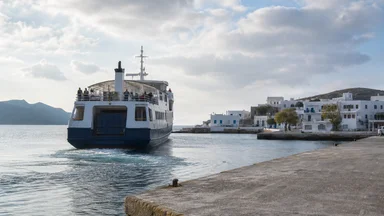
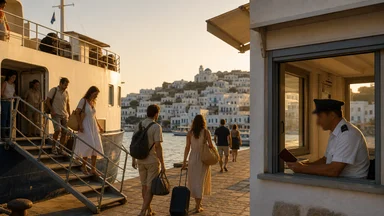
Every travel brochure for Greece shows sun-drenched ferries slicing through cobalt water, passengers leaning on railings, islands rising on the horizon. What the brochures don't show is the spreadsheet. The tiny footnotes. The PDFs dated "valid from June 15 to September 10" that vanish from ferry company websites without explanation. On a Friday in late June 2023, I stood on the dock in Paros holding a ticket for the 12:00 high-speed ferry from Piraeus to Paros—a sailing that had run daily in May but was not scheduled on that Friday in June. The ferry company's website still listed the route, but the timetable footnote specified "Monday–Thursday, Saturday–Sunday" for June. I had missed the footnote. The next sailing was the following morning.
The Brochures Promise Eternal Summer. The Ferries Tell a Different Story.
Greek ferry schedules are not fixed. They shift with demand, school terms, and the availability of crews. The glossy magazines and travel blogs tend to publish one version of the timetable—the peak summer version—and leave it at that. A traveler who books an October trip expecting the same frequency as July will find a very different reality.
In October, the weather is still warm, especially in the Cyclades and Crete. Sea temperatures remain swimmable into mid-month. But tourist numbers drop sharply after the first week. Ferry companies respond by consolidating routes. The daily high-speed catamaran from Piraeus to Heraklion becomes a once-every-two-days conventional ferry. The direct connection from Santorini to Rhodes may disappear entirely.
The brochures do show a "shoulder season" schedule, but it's often incomplete. The PDF on the ferry company's website might list October departures, but the footnote says "subject to change." And change they do. I've seen a ferry canceled the day before because of low bookings, with passengers rebooked on a routing that took twice as long. The company's customer service line, in my experience, is not always staffed in English.
Local islanders know the real schedule by word of mouth. They check the port authority's notice board, not the website. A taverna owner in Naxos once told me, "The ferry comes when it comes. Sometimes three in one day, then none for two days." He wasn't complaining. He was explaining a system that treats schedules as suggestions.
For the traveler, this means one thing: do not assume. A ferry that runs daily in August may run only three times a week in October. And a ferry that runs daily in May may skip Fridays in June. The title of this article is not a hypothetical. It's a specific, documented pattern on certain routes, including some to Crete, where October sailings actually outnumber June sailings on certain days of the week.
June Cuts Friday Sailings. October Runs Daily. Why the Calendar Lies.
The conventional logic would suggest that June, being closer to peak season, would have more sailings than October. But that's not always how Greek ferry companies operate. The reason has to do with demand patterns and crew allocation, not weather.
June is a transition month. Schools in Greece and much of Europe are still in session until mid-June. The first big wave of tourists arrives around the last week of June. Ferry companies, trying to balance costs, often cut sailings on low-demand days—Fridays, for example—to save fuel and crew hours. They add extra Sunday sailings in July, then cut them again in September.
October, by contrast, is a more stable month for certain routes. The summer crowds are gone, but there is a steady trickle of travelers, plus locals returning from holidays and workers moving between islands. Some routes, like Piraeus to Crete, maintain daily sailings through October because the demand is consistent. Crete is a large island with year-round population. The ferry is a lifeline, not just a tourist service.
This creates a counterintuitive situation: in June, you might find that the Friday ferry is canceled, leaving you stranded for an extra day. In October, the same route runs daily. The brochures don't explain this because they don't want to admit that June—marketed as the start of summer—is actually a low point for ferry frequency.
The crew allocation issue is real. Many ferry crews work seasonal contracts. In June, some crews are still finishing winter maintenance or moving between vessels. A ferry that ran daily in May with one crew might switch to a five-day schedule in June while the crew takes mandatory rest days. The schedule is driven by labor rules as much as by passenger demand.
Weather, surprisingly, plays a smaller role than you might think. The meltemi winds can disrupt schedules in August, but October is usually calm. The assumption that October is too windy for ferries is a myth perpetuated by travel agents who want to sell July bookings. In reality, October sea conditions are often better than June.
Three Islands Where Shoulder Season Actually Works (and One That Doesn't)
Shoulder season can be wonderful—fewer crowds, lower prices, more authentic interactions—but it depends heavily on which island you choose. Not all islands are equal when it comes to ferry service and open businesses.
Crete is the safest bet for October. The island is large, with multiple ports (Heraklion, Chania, Rethymno, Agios Nikolaos) and year-round population. Ferries from Piraeus run daily through October, sometimes more than once. The high-speed catamaran may reduce frequency, but the conventional ferries keep a steady schedule. Tavernas in the old towns of Chania and Rethymno stay open until late October, though some close by the 20th. The archaeological sites remain accessible, and the weather is pleasant for hiking the Samaria Gorge.
Santorini in October is a mixed bag. The cruise ships stop coming after September, which means the crowds thin out dramatically. The caldera views are still stunning, and the sunsets are less jostled. But many of the boutique hotels in Oia and Fira close by mid-October. The cable car that connects the old port to the town operates on a reduced schedule. And the famous wineries may require an appointment. Still, for a traveler who wants to see the island without the crush, October is arguably better than June. The ferry frequency from Piraeus drops to about four times a week, so you need to plan around the schedule.
Paros is where I got burned. In June, the ferry from Piraeus to Paros skipped Fridays. I had booked a Friday ticket assuming daily service. The ticket was valid, but only for the conventional ferry that departed at 7:00 AM, not the high-speed one at noon. I had to spend an extra night in Athens. Paros in June is lovely, but the ferry schedule is erratic. In October, the frequency drops further, and many beachside tavernas close by the end of September. The island's nightlife, such as it is, shuts down. Paros is best visited in July or August if you want the full experience.
Milos loses ferry frequency sharply after September. The island's airport has limited flights, so most visitors arrive by sea. In October, the ferry from Piraeus runs three times a week, and the connections from other Cyclades islands become sparse. The famous lunar landscape of Sarakiniko Beach is still accessible, but the boat tours to the Kleftiko caves may not run daily. Milos in October is for the self-sufficient traveler who doesn't mind limited services.
The island that doesn't work in shoulder season is Mykonos. By October, most of the clubs and beach bars are closed. The ferry frequency drops, and the island feels hollow. Mykonos is designed for high-season excess. In October, it's a ghost town with high prices. Better to skip it entirely and visit in July if you must.
What the Hotels Won't Tell You About 'Shoulder Season' Rates
Hotels advertise shoulder season rates as a bargain, and they are—on the surface. Prices drop 30 to 50 percent after mid-September. A room that costs €250 a night in August might go for €120 in October. But there are catches.
The first catch is that many hotels operate with a skeleton crew in October. The receptionist might also be the bartender. The pool may be unheated, and by late October, the water is too cold for swimming unless the hotel has a heated pool. Some hotels close their pools entirely after September. The brochure shows a sparkling infinity pool, but the reality is a covered rectangle with a sign that says "pool closed for season."
The second catch is that tavernas and restaurants close earlier than the hotels suggest. A hotel might stay open until the end of October, but the nearby taverna that served fresh grilled octopus may have closed after September 30. You end up eating at the hotel restaurant, which serves a limited menu at higher prices. The hotel won't tell you this when you book.
The third catch is that services like car rentals, boat excursions, and guided tours operate on reduced schedules. You might find that the rental agency has only manual transmission cars left. The boat trip to the neighboring island runs only on Tuesdays and Thursdays. The guided hike to the monastery requires a minimum of four people, and if you're the only one, it's canceled.
None of this is dishonest. Hotels are upfront about the rates. But the gap between the brochure promise and the on-the-ground reality is wider in shoulder season than at any other time. The traveler who expects a scaled-down version of peak season will be disappointed. The traveler who expects a different experience entirely—quieter, more local, less curated—will be delighted.
One more thing: breakfast. In peak season, hotels offer lavish buffets. In shoulder season, breakfast might be a continental tray delivered to your room or a voucher for a nearby cafe that opens at 9:00 AM. If you're an early riser, this is a problem.
The Real Cost of a 'Flexible' Ticket in the Off-Month
Ferry tickets come in various fare classes: economy, business, flexible, and sometimes a "standby" category that is not officially advertised. The flexible ticket allows you to change your travel date without penalty. It sounds like insurance. In practice, it's often a trap.
In June, a flexible ticket on the Piraeus–Heraklion route costs nearly double the non-refundable fare. The non-refundable ticket might be €45, while the flexible one is €80. If you're confident in your plans, the non-refundable ticket is the better deal. But if your plans change—a missed connection, a weather delay, a sudden desire to stay an extra day—the flexible ticket saves you from buying a whole new ticket.
In October, the situation flips. Flexible tickets are cheaper because the base fare is already low, but the non-refundable tickets are even cheaper. A non-refundable October ticket from Piraeus to Santorini might be €35. A flexible one is €55. The catch is that if you miss the ferry in October, there may not be another one for two days. The flexible ticket lets you switch to that later sailing, but only if there is a later sailing. If the next ferry is full, you're still stuck.
Weather delays are rare in October, but they happen. A meltemi wind can cancel ferries for a day or two. Travel insurance rarely covers schedule changes unless you buy a specific policy. The standard "trip cancellation" insurance covers illness or injury, not "the ferry company decided to skip Friday." Read the fine print.
The real cost of a flexible ticket is not the price difference. It's the false sense of security. A flexible ticket does not guarantee you a seat on the next ferry. It guarantees you the ability to change your booking, subject to availability. If the next ferry is sold out, you're waiting.
For a similar lesson in transport logistics, see our article on Peru's Cruz del Sur bus network, which also skips interchanges after dark, leaving passengers stranded.
How to Read a Greek Ferry Timetable Like a Local
The official ferry company websites—ANEK Lines, Blue Star Ferries, Minoan Lines, SeaJets—publish PDF timetables that are updated seasonally. These PDFs are the starting point, but they are not reliable for planning a trip more than a month in advance.
The first thing to look for is the "period of operation" footnote. A sailing listed as "June 1 to September 30" will not run on October 1, even if the PDF is still online. Some PDFs show a column for "valid from" dates, but the font is tiny and easy to miss.
The second thing is the day of the week. Greek ferries often run on a "Monday, Wednesday, Friday" pattern, or "Tuesday, Thursday, Saturday." Sunday sailings are added in July and August, then cut in September. A ferry that runs daily in July may run only on weekdays in June. Check every day you plan to travel.
The third thing is to use the island port authority's confirmed list, not the ferry company's website. Each island's port authority (Λιμεναρχείο) publishes a weekly schedule, usually on a notice board at the port and sometimes online. The online version is often a scanned PDF of a typed page. It's ugly, but it's accurate. Compare the ferry company's PDF with the port authority's list. If they disagree, the port authority is correct.
Fourth, look for the term "δρομολόγια" (schedules) on the port authority website. Google Translate works well enough. The schedules are usually posted as a single page listing all arrivals and departures for the week. This is the same list the locals check.
Fifth, call the ferry company if you can. The phone number is on the website. The staff speak English, usually. Ask specifically: "Does the ferry from Piraeus to Heraklion run on Friday, October 14?" Don't ask about the general schedule. Ask about a specific date.
Finally, consider using a ferry booking aggregator like Ferryhopper or Direct Ferries. These sites show real-time availability and often have better filters for date and time. But even they can be wrong. The aggregator's data comes from the ferry companies, and the ferry companies sometimes update their schedules after the aggregator has pulled the data. Check again a week before departure.
For a different kind of seasonal travel challenge, read our piece on Hardanger plateau cabin permits, which sell out by May while nearby huts stay empty.
The One Week in October That Breaks All the Rules
October 28 is Ohi Day, a national holiday in Greece commemorating the country's refusal to surrender to Italy in 1940. It is a day of parades, military displays, and, for the traveler, a sudden spike in activity. Ferries add extra services for the long weekend. Hotels fill up. The quiet October rhythm is interrupted.
If you plan to travel in late October, be aware of this week. The weekend closest to October 28 sees a surge in domestic travel. Greeks visit family or take short holidays. Ferries that normally run on a reduced schedule add extra sailings. The port of Piraeus becomes busy again. Accommodation in popular destinations like Nafplio, Thessaloniki, and Heraklion gets booked weeks in advance.
The rest of October remains quiet. The period from October 1 to October 20, and from October 29 onward, is among the calmest of the year. Services are minimal. Many tourist-oriented businesses close by mid-October. But for the traveler who wants to experience Greek island life without the crowds, this is the sweet spot.
The local celebrations on Ohi Day are genuine, not tourist shows. In smaller towns, there are parades with schoolchildren, speeches at the town hall, and a sense of community pride. It is a rare opportunity to see a national holiday celebrated by locals, not staged for visitors. The downside is that many shops and museums close for the day, and public transport runs on a Sunday schedule.
If you want the quiet October, avoid this week. If you want a glimpse of real Greek culture, plan for it. Either way, know that the ferry schedule for that week is not representative of the month as a whole.
This kind of seasonal nuance is exactly what travel coverage often misses. The same principle applies to other destinations: for example, Gion Matsuri float assembly in Kyoto opens to the public while hotels triple by late June—another case where the calendar dictates experience more than any brochure.
What to Do Next: A Practical Checklist
Before you book that October trip to the Greek islands, run through this checklist. It won't guarantee smooth sailing, but it will reduce the odds of a dock-side surprise.
- Check the ferry schedule for your exact travel dates—not just the month. Use the port authority's confirmed list, not the ferry company's PDF. If you're traveling in June, pay special attention to Friday sailings. If October, confirm that the route runs on your day of departure.
- Book non-refundable tickets only if you're certain of your itinerary. If there's any chance you'll change plans, the flexible fare may be worth the premium. But remember: flexible doesn't mean guaranteed on the next sailing.
- Call the hotel directly and ask about services in shoulder season. Ask about breakfast, pool heating, nearby restaurant closures, and the availability of car rentals. If the hotel hesitates, that's a red flag.
- Plan around Ohi Day if traveling in late October. Book accommodation in advance if you want to be in a popular destination that week. Alternatively, use the holiday as an opportunity to experience local culture—but expect closures and crowded ferries.
- Build buffer days into your itinerary. If a ferry is canceled or skipped, you may have to wait a day or two for the next one. A flexible schedule is the best insurance against the whims of the Greek ferry system.
In the end, the question is not whether October or June is better. It's whether you're willing to trade predictability for peace. The brochures sell you a fantasy of endless summer. The reality is a spreadsheet with footnotes. Which one are you packing for?