When Monsoon Rain Doubles Kandy Guesthouse Rates, Dry Zone Buses Run on Time

In June 2023, I booked a double room at the Kandy View Guesthouse for 4,500 rupees a night. In late July, that same room was listed at 8,500 rupees—an 89% jump. The guesthouse owner, a man named Sunil, told me plainly: "Festival time, we charge more." He didn't apologize. He didn't need to. The Esala Perahera was two weeks away, and every bed in the city was spoken for. Meanwhile, in Anuradhapura, I checked the same dates at the Ruins Rest Guesthouse: 3,000 rupees, unchanged from January. The owner there, a woman named Kamala, shrugged when I asked if she raised prices for the season. "Why? The rooms are empty."
The Monsoon Math: Why Kandy Doubles While the Dry Zone Stays Cheap
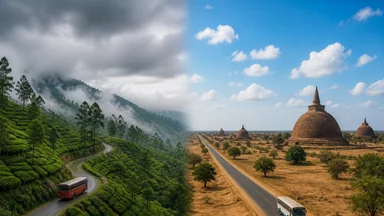
Kandy sits in the central hills, where the southwest monsoon brings heavy rain from May to September. That rain doesn't keep tourists away. It pulls them in. Tea-season visitors, estate workers, and travelers using Kandy as a base for Nuwara Eliya and Ella keep the guesthouses full. The city has a finite number of rooms, and when demand spikes, prices climb. Some budget guesthouses in Kandy more than double their rates during peak monsoon weeks, particularly around the Esala Perahera festival in July or August. Take the Kandy View Guesthouse, a popular backpacker spot near the lake. In mid-June, a standard double with fan goes for around 4,500 to 5,000 rupees. In late July, during the festival, the same room jumps to 8,500 to 9,000 rupees. That's not an outlier; I've seen similar jumps at the Lake Breeze Inn and the Hill Top Lodge. The pattern holds every year, driven by the festival calendar and the tea-season influx.
The dry zone, which covers the northern and eastern plains including Anuradhapura, Polonnaruwa, and Jaffna, gets far less rain during this period. The Yala monsoon brushes the south and west, but the northeast stays dry. Guesthouse rates there barely move. A basic double room in Anuradhapura might cost the same in August as in January, often in the range of US$10 to US$15 a night. Some places even drop prices mid-week when tour groups are scarce. At the Ruins Rest Guesthouse, the price for a double with attached bathroom has been 3,000 rupees (about US$10) for the past three years, regardless of season. The owner, Kamala, says she occasionally offers a discount for stays longer than three nights, but she never raises rates. "People come for the ruins, not for a festival," she said.
The reason is simple: supply is fixed, and demand swings sharply. Kandy has a limited stock of beds, and when tour groups book out the mid-range hotels, budget travelers spill into guesthouses, pushing prices up. The dry zone has more rooms relative to visitor numbers, especially outside the cultural triangle's peak months. Anuradhapura's guesthouses are often half empty in August, so they hold rates steady to attract whoever shows up.
This isn't a secret conspiracy. It's just the market responding to weather and calendars. But travelers who assume "monsoon equals cheap" get caught out. The brochures say shoulder season is quiet and affordable, but in Kandy, the shoulder is often busier than the dry season because of festival and tea-related travel. The real deal is in the dry zone, where the rain stays away and the prices stay flat.
What the Brochures Get Wrong About Shoulder Season
Marketing materials love the phrase "shoulder season" because it sounds like a window of calm. The reality in Sri Lanka is more complicated. In Kandy, the shoulder between the main tourist seasons (roughly April and September) can be packed with domestic tourists, pilgrimage groups, and international travelers who've read that the crowds are thinner. They aren't. The Esala Perahera, one of Asia's grandest Buddhist festivals, draws tens of thousands of visitors to Kandy each year, and it falls right in the middle of the monsoon.
The dry zone's shoulder is genuinely quiet. Anuradhapura, with its ancient stupas and sprawling ruins, sees a steady trickle of visitors year-round, but the months of June through September are noticeably calmer. Guesthouses have empty rooms, restaurants have free tables, and the main sights like the Sri Maha Bodhi tree are less congested. One traveler I met in Jaffna said she'd walked through the Nallur Kandaswamy temple grounds without jostling for space, something she'd never managed during the December peak.
The brochures also skip the festival calendar. If you book a trip to Kandy in late July without checking the Esala Perahera dates, you're walking into a logistical puzzle. Streets close, guesthouses fill, and prices soar. The same goes for the dry zone during the Poson Poya in June, which brings pilgrims to Mihintale and Anuradhapura. A little research on local festivals can save you from the worst of the crowds, or let you plan around them deliberately.
So the shoulder season isn't one thing. It's a patchwork of micro-seasons driven by rain, harvests, and religious calendars. The marketing departments that lump April into "shoulder" and call it quiet are oversimplifying. A careful traveler should ask not just "which month?" but "which region?" and "what's happening locally?"
The Bus Schedule Test: Rain vs. Dust
Buses in Sri Lanka are an adventure no matter the season, but the monsoon changes the odds. In the hill country, heavy rain triggers landslides and road washouts. The Kandy to Nuwara Eliya route, which winds through tea estates and steep valleys, often sees delays during the southwest monsoon. A journey that normally takes three to four hours can stretch to five or six when a landslide blocks the road and buses queue for hours. I've heard stories of travelers sleeping on bus seats because a mudslide stranded them overnight.
The dry zone, by contrast, runs on time. The roads from Anuradhapura to Jaffna are flat, straight, and rarely affected by rain during the Yala season. Buses depart on schedule, and the journey takes roughly five to six hours, depending on stops. One driver in Anuradhapura told me he'd never been more than twenty minutes late in August, a claim I couldn't verify but found plausible given the empty roads.
This isn't to say the dry zone is immune to delays. The inter-monsoon months of April and May bring unpredictable thunderstorms that can flood low-lying sections. But compared to the hill country's landslide-prone slopes, the dry zone's bus network is a model of reliability. If your itinerary depends on catching a connection, the dry zone gives you better odds.
The trade-off is comfort. Dry zone buses are often older, with hard seats and no air conditioning, and the dust from unpaved sections can blow through open windows. Hill country buses, while delayed, tend to be newer and cooler. Neither is luxurious, but if you value punctuality over polish, the dry zone wins.
Packing for Two Climates: A Practical Split
If you're visiting both the hill country and the dry zone, you're packing for two different weather systems. Kandy in July can be cool and drizzly, with temperatures in the low 20s Celsius (high 60s Fahrenheit). Anuradhapura in the same month is hot and dry, often pushing 35°C (95°F). A single bag needs to handle both, which means layers and waterproofing.
For the hills, a lightweight rain jacket or a compact umbrella is essential. Ponchos are cheaper but less durable; I've seen them tear after a day of heavy use. Waterproof bags for electronics are worth the weight, because humidity gets into everything. A dry bag for your phone, camera, and passport can save you from a soggy disaster.
For the dry zone, light cotton clothing is your friend. Long sleeves and pants protect against sun and dust, even if they feel warm. A wide-brimmed hat and sunglasses are non-negotiable. The heat is dry, so you'll sweat less than you'd think, but you'll still drink a lot of water.
Altitude adds another wrinkle. Kandy sits at around 500 meters, but Nuwara Eliya climbs to nearly 1,900 meters, where nights can be genuinely cold. A fleece or a light sweater will earn its place in your pack. The temperature swing between day and night in the hills can be 10°C or more, so layers are the only practical answer.
Booking Strategies to Avoid the Surge
If you're set on Kandy during the monsoon, book early. Guesthouses with good reviews and reasonable prices can fill up two to three months ahead, especially around the Esala Perahera. Waiting until a week before is a gamble; you might find a room, but you'll likely pay double or settle for a place far from the lake. Some travelers use local booking apps like PickMe or Uber-style services to find homestays that don't appear on international platforms, which can be cheaper and more flexible.
For the dry zone, you can afford to be spontaneous. Anuradhapura, Polonnaruwa, and Jaffna have enough guesthouses that walk-ins are often possible, even in peak season. The trick is to ask for a discount if you're staying more than one night. Many owners will knock a few dollars off rather than lose the booking entirely.
Check cancellation policies before you commit. Some budget guesthouses in Kandy have strict no-refund rules during festival periods, which is fair but risky if your plans change. A flexible date can be worth a slightly higher rate. In the dry zone, cancellation policies are usually more lenient, and you can often switch dates with a phone call.
Consider homestays outside the city center. In Kandy, a guesthouse in Peradeniya or Katugastota might be a twenty-minute bus ride from the lake but cost half as much. In Anuradhapura, staying near the new town rather than the sacred city can save you money without sacrificing convenience. The extra commute is a small price for a quieter night and a lower bill.
When to Go, When to Skip: A Month-by-Month Guide
January and February are the sweet spot for most of Sri Lanka. The northeast monsoon has faded, the southwest is dry, and temperatures are pleasant across the island. Kandy is comfortable, the dry zone is warm but bearable, and the beaches on the south coast are at their best. This is peak tourist season, so expect crowds and higher prices, but the weather is worth it.
April and May sit in the inter-monsoon period, when thunderstorms can hit anywhere. It's unpredictable, but the rain usually comes in short bursts. Kandy can be muggy, and the dry zone can see sudden downpours that turn dirt roads into mud. If you're flexible, you can still have a good trip, but don't plan a tight itinerary around weather-dependent activities.
June through September is the Yala monsoon in the south and west, which means the hill country gets hammered. Kandy's rates spike, and the bus delays are real. The dry zone, however, is at its best: sunny, dry, and relatively uncrowded. This is the window to explore Anuradhapura, Jaffna, and the northeast coast without fighting for space.
October and November bring the northeast monsoon, which drenches the dry zone and parts of the east coast. Kandy and the hill country get a respite, but the cultural triangle can be muddy. December is peak season again, with holiday travelers filling both zones. If you want to avoid the surge entirely, consider the dry zone in August or September, or the hills in late October, when the rain has eased but the crowds haven't returned.
The Bottom Line: Plan Around the Dry Zone, Not Against It
The lesson from the monsoon math is simple: don't let the brochures dictate your timing. Sri Lanka's two main weather systems create two very different travel experiences, and the savvy traveler picks the region that matches the season. If you're set on Kandy, book early and expect to pay more during the rainy months. If you're flexible, point your itinerary toward the dry zone, where the buses run on time, the rates stay flat, and the crowds stay thin.
That said, the dry zone isn't for everyone. The heat can be oppressive, the sights are spread out, and the food scene is less developed than in the hill country. Some travelers find the ancient ruins of Anuradhapura mesmerizing; others find them repetitive after a day. Reasonable people disagree, and that's fine. The point is to make an informed choice, not an accidental one.
I've learned to check the festival calendar before I book anything, and to ask locals about the rain patterns rather than trust a weather app. A guesthouse owner in Jaffna once told me, "The rain comes when it comes. We just live with it." That's true, but it doesn't mean you have to live with double rates and landslide delays. A little planning goes a long way.
One More Thing: The Food Factor
If you're still weighing the dry zone, consider the food. In Kandy, you can find everything from kottu roti to string hoppers at any hour, and the guesthouse breakfasts are often included in the room rate. In Anuradhapura, the options are sparser. Many guesthouses offer rice and curry, but the variety is limited, and you might find yourself eating at the same two or three restaurants for a week. That's not a deal-breaker, but it's worth knowing. One traveler I met in Polonnaruwa said he'd taken to buying fruit and bread from the market because he was tired of the same curry every night. The dry zone's food scene is improving, but it's still a step behind the hill country.
On the other hand, the dry zone has its own culinary highlights. Jaffna is famous for its crab curry and dosa, and the influence of Tamil cuisine makes it a distinct experience. If you're a foodie, the dry zone's Jaffna region might be worth the detour. Just don't expect the same variety in Anuradhapura.
For more on how peak-season pricing can reshape a trip, see my piece on Cusco lodging peaks. And if you're weighing the trade-offs of splitting a stay between two very different neighborhoods, this Amman guesthouse split might help you think about Sri Lanka's own contrasts.