Greece Schengen Category Fees Vary at Land Borders While Airports Skip the Paperwork

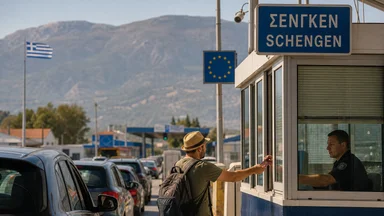
Greece sits at the edge of the Schengen Area, a position that makes its borders a study in uneven application of the rules. Travellers flying into Athens or Thessaloniki typically pass through airports that have streamlined the entry process, often skipping the paperwork that still surfaces at land crossings. The result: the same nationality, the same visa category, and sometimes a difference of tens of euros depending on whether you arrive by air or by road. The fee variations are real, and they matter for anyone planning a trip that involves crossing into Greece by land.
The Airport-Free Border: Where Greece's Schengen Fees Actually Vary
Greece shares land borders with Albania, North Macedonia, Bulgaria, and Turkey, and each crossing has its own rhythm. At the busier checkpoints like Evzones near the North Macedonian border or Kipi on the Turkish frontier, the Schengen rules apply, but the execution can differ from airport arrivals. Some land posts have been known to charge a small border processing fee on top of the standard Schengen visa cost, though this is not uniform and may depend on the traveller's nationality and the specific crossing.
For instance, travellers crossing at Evzones have reported an unofficial 'facilitation' charge of around €5–10 in recent years, though such reports are anecdotal and not confirmed by official sources. Similarly, at Kipi, some travellers have mentioned a similar surcharge, but there is no published schedule. These charges are not part of the official Schengen fee structure, and their legal basis is questionable. In contrast, the airports, such as Athens International, tend to skip the extra paperwork. The entry process for Schengen visa holders is largely automated, with e-gates for registered travellers and a straightforward stamp for others. The fee you pay for the visa itself, whether issued by a Greek consulate or another Schengen state, is the same regardless of where you enter, but the ancillary costs can creep in at land borders, sometimes as that 'facilitation' charge with no clear legal basis.
Fee categories also shift by crossing. Some land borders in the north, particularly those used by regional travellers from the Balkans, have been reported to charge reduced fees for short stays, possibly aligning with local agreements. For example, a traveller from North Macedonia might pay a lower fee at Evzones than a traveller from the UK, but such reductions are not always published and can change without notice. A traveller who arrives expecting the standard airport price may face an unexpected surcharge or, conversely, a pleasant saving. The data here is likely stale by 2026, as Greece and the EU continue to harmonise border practices, so treat any specific figure as indicative rather than definitive.
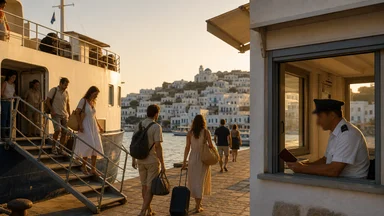
The uneven application is not a secret. Border guards at land posts often have more discretion than their airport counterparts, especially in remote areas where the volume of travellers is lower. This means that a traveller with a slightly irregular document might be waved through at one crossing and questioned at another. The Schengen rulebook is supposed to be uniform, but the reality on the ground is that local practice fills the gaps.
For the careful traveller, the lesson is to check the specific crossing you plan to use, not just the general Schengen rules. A quick search on forums like Lonely Planet's Thorn Tree or the official Greek police website can reveal recent experiences, but be aware that conditions change. The safest approach is to budget 10–20% extra for border fees if you are entering by land, and to keep all your paperwork readily accessible.
How the Biometric Rollout Changed the Entry Math
The European Union's new biometric border system, which collects fingerprints and facial images from non-EU travellers, began a rocky rollout in 2025, with airports across the continent reporting long delays and short tempers. The New York Times covered the chaos in August 2026, noting that the system, designed to improve security, initially slowed processing times at major hubs like Frankfurt and Paris. Greek airports were not immune, with reports of queues stretching beyond the usual peak hours.
For travellers to Greece, the biometric system adds a layer of time, not an extra fee, but the opportunity cost is real. A traveller who planned a tight connection through Athens may now find that the biometric registration takes an extra 10–15 minutes, potentially missing a onward flight. Officials have promised improvements, and by late 2026 the system is expected to be more streamlined, but the transition period has been bumpy.
The biometric data is stored in a central EU database, and once enrolled, a traveller can use e-gates at many airports, which speeds up future entries. However, the first enrolment is mandatory for most non-EU nationals, and it requires a physical presence at the border, which is where the delays occur. Some travellers have reported that land borders are slower to implement the biometric checks, meaning that a crossing that once took minutes now takes longer, but without the same queue management as airports.
The trade-off is between security and convenience. Supporters argue that the biometric system reduces identity fraud and makes the Schengen Area safer. Critics point out that the system was not fully tested, and that the rollout has been a classic example of a good idea executed poorly. For the traveller, the practical takeaway is to plan for extra time at any Greek border, whether air or land, and to ensure your biometric data is up to date if you have been enrolled before.
The Category Confusion: Which Visa Type Do You Actually Need
The Schengen visa comes in several categories, and choosing the wrong one can double the cost or lead to a refusal at the border. The most common are short-stay (type C), which covers tourism, business, and transit, and long-stay (type D), which is for stays over 90 days. Within type C, there are distinctions between single-entry and multiple-entry, and the fee structure reflects these differences, though the base fee is similar.
The confusion arises when travellers misclassify their purpose. A business traveller attending a conference in Athens might think they need a business visa, but the Schengen authorities often treat short business trips as tourism for fee purposes, unless the trip involves paid work. Similarly, a transit traveller passing through Greece to another non-Schengen country might assume they need a transit visa, but if they leave the airport or stay more than a few hours, they may need a full short-stay visa.
The fee difference can be significant. As of late 2024, the standard Schengen visa fee was around €80–90, but some categories, like transit, may be lower, around €60–70, and certain nationalities have reduced fees. However, if a traveller applies for a tourist visa and then uses it for business, the border guard may question the purpose and could refuse entry, forcing a new application and a second fee.
The European Commission publishes the official fee schedule, but it is subject to change, and there are bilateral agreements that can alter the amount for specific countries. For example, travellers from some Eastern European countries may have their fees waived, while others face a higher fee due to readmission agreements. It is essential to check the current rules for your nationality before applying, and to be honest about your purpose, as the risk of refusal is not worth the saved euros.
One common mistake is assuming that a visa issued by another Schengen state is automatically valid for Greece. Under the Schengen rules, a visa is valid for the entire area, but if you intend to spend the majority of your time in Greece, you should apply through the Greek consulate. Border guards can question why you applied elsewhere, and while this is not usually a reason for refusal, it can lead to delays and extra scrutiny.
Paperwork Mistakes That Get Travellers Turned Around
Even with the correct visa category, a missing document can end a trip before it begins. The most common error is failing to provide proof of accommodation for every night of the stay. A traveller who plans to stay with friends might think a letter of invitation suffices, but Greek border officials often require a hotel booking or a notarised statement from the host, which many travellers do not have.
Insufficient funds evidence is another frequent failure. The Schengen rules require travellers to show they can support themselves financially, and the amount is not fixed. Some border guards ask for a bank statement showing a balance of at least €50–60 per day, while others accept a credit card and an itinerary. The inconsistency makes it impossible to prepare accurately, so the prudent traveller carries multiple forms of proof: a recent bank statement, a credit card, and cash.
Passport validity is a third issue. Schengen rules require that a passport be valid for at least three months beyond the intended departure date, and some border guards interpret this strictly. A traveller whose passport expires in two months may be turned back, even if their visa is still valid. This is a common mistake among travellers who assume their visa is the only document that matters.
The fee payment method can also cause problems. At some land borders, only cash is accepted, and the guards may not have change for a €50 note, forcing the traveller to overpay or find a nearby ATM. At airports, card payments are more common, but the biometric system may not accept certain foreign cards, leading to delays. Having a mix of payment options, including small-denomination cash, can help avoid such issues.
Border guard discretion varies widely. In practice, a traveller with a complete file, even if one document is slightly off, is more likely to be waved through than one who seems disorganised. The human element is impossible to predict, so presenting everything neatly and answering questions directly is a reasonable strategy. A calm demeanour can sometimes outweigh a missing document, but it is not a reliable plan.
Cost Breakdown: Budgeting for the Schengen Fee
The standard Schengen visa fee, as of late 2024, is around €80–90 for adults, with reduced rates for children aged 6–12, typically around €40–45, and no fee for children under 6. These figures are set by the European Commission and apply to applications made through Greek consulates or visa centres. However, the actual cost to the traveller is often higher because of service fees charged by the outsourced visa centres that handle applications.
Visa processing centres in countries like the UK, the US, and India add their own service charge, which can range from €30–60, depending on the location and the level of service. This means the total cost for a single-entry Schengen visa can easily reach €120–150, before any travel expenses. For a multiple-entry visa, which is valid for one to five years, the fee is the same as a single-entry, making it a better value for frequent travellers, but the application requirements are stricter.
Land border surcharges are less systematic. Some crossings have been reported to charge a 'border fee' of €5–10, though the legal basis is unclear, and it may be an unofficial practice that has faded with the biometric rollout. The Greek police have denied the existence of such fees, but travellers have reported them on forums. The safest assumption is that land borders may add a small cost, and to budget accordingly.
Cash versus card is another variable. At airports, card payments are now common, but at land borders, cash is often the only option, and the exchange rate may not be favourable. Having some euros in cash, preferably in small notes, can help cover any unexpected border fees or the cost of a meal if you are delayed. The total budget for a Schengen visa application, including the visa fee, service fee, and potential border surcharges, should be around €150–200 for a single-entry, and up to €300 for a multiple-entry if you use a premium service.
The cost breakdown is rarely transparent, and the traveller who compares the official fee schedule with the actual amount paid is often surprised. The European Commission publishes the fees, but the visa centres and border posts add their own layers, and the traveller has little choice but to pay. A careful traveller will research the specific visa centre they plan to use and check recent reports on border fees, but even then, the final cost can vary by a few euros.
Practical Takeaways for the Careful Traveller
The first takeaway is to check the official EU sources for the current Schengen visa fee, but to treat them as a starting point, not a guarantee. The fee schedule changes, and the service charges vary by location, so the total cost can be significantly higher than the base fee. A quick search on the Greek Ministry of Foreign Affairs website or the EU's Visa Code can give you the official figures, but you should also check the website of the visa centre you plan to use.
Plan for extra border time, especially if you are entering by land or during the summer peak. The biometric system has added time to every entry, and the queues at Athens airport in August can be lengthy. If you have a connecting flight, allow at least three hours between arrival and departure, and if you are driving across the border, expect to wait at least 30 minutes, even in quiet periods.
Carry printed documents, even if you have digital copies. Border guards and visa officers are more comfortable with paper, and a phone that has died can cause a delay. Print your hotel bookings, bank statements, and travel insurance, and keep them in a folder that is easy to access. The digital version is a backup, not the primary.
Verify the fee rules before you travel, not just at the application stage. The visa fee is paid at application, but the border may have additional requirements, such as proof of sufficient funds or a return ticket. These are not fees, but the failure to provide them can result in a refusal, which is a cost in time and money. The European Commission's website has a checklist, but it is not exhaustive, so ask other travellers on forums for recent experiences.
Budget 10–20% extra for unexpected costs. Whether it is a border surcharge, a service fee you did not anticipate, or a night in a hotel because you missed a connection, the margin will save you stress. The Schengen area is not cheap, and Greece is no exception, so a small buffer is a sensible part of any travel budget.
Finally, remember that the rules are applied by humans, and humans are inconsistent. A traveller who is polite and prepared is more likely to be treated leniently, but there is no guarantee. The Schengen system is a compromise between security and freedom, and the traveller who understands its quirks will have a smoother journey. The fee variations at land borders and the airport's streamlined process are part of the same patchwork, and the careful traveller learns to navigate it, not to fight it. However, it is also worth acknowledging that no amount of preparation can eliminate all uncertainty, and the best-laid plans can still encounter an unpredictable border guard or a last-minute policy change. The key is to remain flexible and to accept that some variables are beyond individual control. For those who prefer certainty, the airport route may offer a more predictable experience, while land crossings demand a tolerance for ambiguity. Ultimately, the choice between air and land entry is not just about cost, but about the kind of travel experience one values: the efficiency of a major hub versus the adventure of a remote checkpoint.