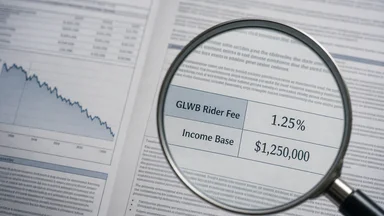
Private Trust That Collected Fees on Assets It Never Held Control Over


When a wealthy family places assets in a trust, the marketing material typically promises safety, professional oversight, and a ring-fenced structure. The trustee, the narrative goes, will protect the corpus, make prudent investment decisions, and ensure the grantor's wishes are carried out. But a closer look at many trust agreements reveals a startling gap: the trustee collects annual fees on assets it never legally controls. The custodian bank holds the securities; the trustee merely processes paperwork. Yet the fee bill arrives each year, calculated on the full portfolio value, regardless of whether the trustee has any power to direct, sell, or even verify those assets. This article traces how this misalignment arises, who benefits, and what the wealthy client can do about it.
The Promise of Control That Vanishes in Fine Print
Trust marketing often emphasizes hands-off safety. The client is told their assets will be protected by a fiduciary who must act in their best interest. The trust document itself, however, may tell a different story. Many modern trust structures separate legal title from beneficial ownership. The custodian bank holds the securities in its name; the trustee holds only administrative authority. The trustee's power to direct investments may be explicitly limited or delegated to an investment advisor.
In a directed trust, for example, the trustee is required to follow the instructions of a trust advisor or protector. The trustee cannot veto a bad investment or redeem a struggling holding. Its role is ministerial: processing distributions, filing tax returns, and sending statements. Yet the fee schedule typically applies to the entire net asset value of the trust, including assets over which the trustee exercises no discretion.
Clients rarely read the fine print carefully. They assume the trustee is overseeing the portfolio. The contract, though, may state that the trustee has no duty to monitor the performance of assets held by a custodian. Some trust agreements even include exculpatory clauses that shield the trustee from liability for losses caused by the custodian or investment manager. The fee, however, remains unchanged.
This disconnect is not accidental. Trust companies and private banks have designed these products to generate steady fee income without the operational burden of active management. The client pays for a promise of control that the contract itself negates. The gap between marketing and legal reality is where the revenue lives.
How a Trust Can Collect Fees on Assets It Never Controls
The mechanics are straightforward. A trust's fee schedule is almost always tied to the net asset value of the trust corpus. The trustee calculates an annual fee—typically in the range of 1 to 2 percent of assets under management—and bills the trust quarterly. But the trustee may have no physical or legal possession of the underlying securities. Those assets sit in a custody account at a bank, often the same institution that serves as trustee, but held under a separate legal agreement.
In a typical arrangement, the grantor transfers assets to the trust. The trustee then opens a custody account at a bank—sometimes its own affiliate, sometimes an independent custodian. The custodian holds legal title to the securities and executes trades at the direction of the investment manager. The trustee never touches the assets. It does not hold the stock certificates, does not have signature authority over the account, and cannot unilaterally sell or transfer the assets.
The trustee's role is limited to administrative tasks: maintaining records, preparing tax filings, and issuing beneficiary statements. Despite this limited function, the fee is calculated on the full portfolio value. Some trust agreements even include a minimum fee that applies regardless of the trustee's actual workload.
Delaware statutory trusts provide a clear example. In these structures, the trustee's duties are often narrowly defined by statute. The trustee may have no investment discretion and no duty to question the custodian's actions. Yet the fee is still based on the gross assets. The statutory language permits this because the fee is considered compensation for the trustee's availability and administrative services, not for active management.
The Revenue Model That Rewards Asset Accumulation, Not Oversight
The fee structure creates a perverse incentive. The trustee earns more when the portfolio grows, but it has no obligation to ensure the assets are properly valued, liquid, or even exist. This misalignment can be particularly harmful when the trust holds illiquid assets, such as private equity stakes, real estate partnerships, or hedge fund interests.
Consider a trust that holds a limited partnership interest in a venture capital fund. The fund may take years to return capital. During that time, the trustee charges an annual fee on the reported net asset value of the partnership interest, even though the trustee cannot sell the interest or force a distribution. The client pays for oversight that does not occur.
Some estimates put the average trust fee near 1.2 percent of assets under management annually. On a $10 million trust, that amounts to $120,000 per year. Over a decade, the trustee collects $1.2 million in fees, regardless of whether the assets perform well or even remain accessible. The fee continues even during litigation or when assets are frozen by court order.
The pass-through of custody costs adds another layer. The trustee bills the trust for the custodian's fees, even though the trustee selected the custodian. The client effectively pays twice: once for the trustee's administrative services and once for the custodian's safekeeping. The trustee has little incentive to negotiate lower custody fees because the cost is borne by the trust.
One Family Office That Discovered the Gap the Hard Way
The Smith family office—a pseudonym for a real midwestern family with roughly $50 million in assets—placed a significant portion of their wealth in a directed trust administered by a well-known corporate trustee. The trust held a mix of publicly traded securities and a large position in a private real estate partnership. The partnership was illiquid, with a lock-up period of seven years.
For five years, the trustee charged an annual fee of 1.1 percent on the full portfolio value, including the partnership interest. The family office assumed the trustee was monitoring the partnership's performance and could redeem the interest if necessary. But the trust agreement gave the trustee no such power. The investment decisions rested entirely with the family's investment advisor, who had a separate agreement with the trust.
When the real estate partnership encountered financial difficulties, the family office asked the trustee to redeem the interest. The trustee declined, citing the directed-trust provisions. The family discovered that the trustee had no duty to act and no liability for the partnership's losses. The fees, however, had been collected on the full value each year.
The family eventually sued, alleging breach of fiduciary duty. The case settled out of court for roughly half the fees paid—about $1.4 million. The settlement included no admission of wrongdoing. The family's legal costs exceeded $300,000. The experience left them with a clear lesson: the fee schedule and the duty schedule must be aligned before signing.
Statutory Language That Permits This Misalignment
The legal framework for trusts in the United States is largely state law. The Uniform Trust Code, adopted in some form by most states, provides the baseline. Section 802 of the UTC allows a trustee to charge a fee based on the value of the trust corpus, even if the trustee does not control the assets. The statute does not require the fee to be proportional to the trustee's duties.
Directed-trust statutes, which exist in Delaware, South Dakota, Alaska, and other states, explicitly shield trustees from liability when they follow the instructions of a trust advisor. These statutes were designed to attract trust business by reducing trustee risk. But they also create a gap: the trustee collects fees while bearing no responsibility for investment outcomes.
The Restatement (Third) of Trusts, a non-binding but influential legal treatise, suggests that fees should be reasonable in light of the trustee's duties. But reasonableness is rarely litigated. Courts generally defer to the terms of the trust document. If the document says the trustee is entitled to a fee on all assets, the fee is enforceable.
Some states have considered reforms. A 2024 legislative proposal in one state would have required trustees to disclose whether they hold legal title to trust assets and to offer a reduced fee schedule for non-controlled assets. The bill failed in committee after opposition from the trust industry, which argued that the disclosure would confuse clients and undermine the simplicity of standard fee structures.
Practical Traps for the Wealthy Client Shopping for a Trust
For the wealthy individual considering a trust, the first question to ask is: who holds legal title to the assets? If the answer is a custodian bank, not the trustee, the fee structure needs scrutiny. The client should request a fee schedule that distinguishes between controlled and non-controlled assets. Some trustees are willing to negotiate a reduced fee for assets they cannot direct.
The custody agreement should be reviewed separately from the trust agreement. The client should confirm that the trustee has the right to verify asset valuations and to replace the custodian if necessary. Independent asset verification—perhaps by a third-party accounting firm—can catch discrepancies before they become costly.
The fee cap should be tied to the trustee's actual duties. If the trustee has no investment discretion, the fee should reflect that. Some trustees offer a flat annual fee for administrative services, with a separate charge for investment management. This structure aligns compensation with work performed.
Finally, the client should insist on a provision that suspends fees during any period when the trustee cannot exercise its duties—such as during litigation, a freeze, or a forced hold. Such clauses are rare but negotiable for large trusts. The key is to ask before signing, not after the fees have been collected.
The Regulatory Blind Spot That Lets This Persist
The Securities and Exchange Commission does not regulate trust fee structures. Trusts are generally exempt from SEC registration under the Investment Company Act of 1940, unless they are offered publicly. State banking departments oversee trust companies, but their audits rarely focus on fee reasonableness. The primary regulatory tool is the fiduciary duty standard, which is defined loosely in trust law.
The Office of the Comptroller of the Currency, which regulates national banks that serve as trustees, has issued guidance on trust fees but has not mandated disclosure of the control gap. A 2022 OCC bulletin reminded banks that fees must be "fair and reasonable" but provided no specific metrics or enforcement mechanisms.
The trust industry argues that clients are sophisticated and can negotiate their own terms. Critics counter that the complexity of trust documents and the asymmetry of information between the trustee and the grantor make informed negotiation difficult. The typical client signs a pre-printed form agreement with little room for modification.
A reform push in 2024, led by a coalition of consumer advocates and estate planning attorneys, proposed requiring trustees to disclose whether they hold legal title to trust assets and to offer a reduced fee schedule for non-controlled assets. The bill failed in committee after opposition from the trust industry. The reform effort highlighted the tension between protecting consumers and preserving the flexibility that makes trusts useful. No federal or state legislation is currently active on this issue.
Comparing Trust Structures: Directed vs. Discretionary
Not all trusts are created equal when it comes to fee alignment. A discretionary trust, where the trustee has full investment authority, may justify higher fees because the trustee actively manages the portfolio. In contrast, a directed trust strips the trustee of that authority, yet the fee schedule often remains identical. This disparity is rarely highlighted in marketing materials.
Consider two trusts of the same size. One is a discretionary trust where the trustee selects investments, rebalances, and monitors performance. The other is a directed trust where the trustee merely follows instructions from an advisor. Both may charge the same percentage fee. The client in the directed trust effectively subsidizes the trustee's lack of effort. Some trustees offer a tiered fee structure: a lower percentage for non-discretionary assets and a higher percentage for discretionary assets. But these tiers are not standard and must be specifically negotiated.
A 2023 survey by a wealth management consultancy found that roughly 60 percent of large corporate trustees charge the same fee regardless of the trustee's level of discretion. Only about 20 percent offer any discount for directed trusts. The rest have a single fee schedule that applies uniformly. This suggests that the industry has little incentive to differentiate pricing because clients rarely demand it.
Counterarguments: When the Fee Might Be Justified
Some trust professionals defend the current practice. They argue that even a directed trustee performs valuable services: maintaining records, preparing tax returns, handling distributions, and ensuring compliance with trust terms. These administrative tasks are not trivial, and the fee compensates for the trustee's availability and liability exposure. Even if the trustee cannot direct investments, it still bears some risk, such as ensuring that distributions are made to the correct beneficiaries and that the trust's tax filings are accurate.
Moreover, the fee covers the cost of infrastructure—software, legal compliance, staff training—that supports the trust. A trustee that charges a flat percentage fee simplifies billing for the client, who does not have to track separate charges for each service. Proponents argue that separating fees into controlled and non-controlled components would add complexity and administrative cost, potentially reducing the net benefit to the trust.
Yet these defenses have limits. The administrative burden of a directed trust is often lower than that of a discretionary trust, since the trustee does not perform investment analysis or make trading decisions. A fee that does not reflect this difference amounts to a windfall for the trustee. The client should at least have the option to pay a reduced fee for assets over which the trustee has no control.
International Comparisons: How Other Jurisdictions Handle This
The United States is not alone in this regulatory gap, but some jurisdictions have taken steps to address it. In the United Kingdom, trust fees are more commonly structured as a flat annual fee plus a transaction-based charge, rather than a percentage of assets. The UK's Trusts of Land and Appointment of Trustees Act 1996 does not mandate a specific fee structure, but the courts have occasionally reviewed fees for reasonableness. In one notable case, a trustee was ordered to refund fees that were disproportionate to the work performed.
In Switzerland, trust law is less developed, but the Swiss Banking Act requires that fees be disclosed in writing and that they be consistent with the services provided. Swiss trustees often charge an hourly rate or a fixed fee, rather than a percentage of assets, especially for trusts that hold illiquid assets. This reduces the misalignment between fees and control.
Some offshore jurisdictions, such as the Cayman Islands and the British Virgin Islands, have adopted the Trusts (Private International Law) Act, which allows for directed trusts but also includes a requirement that fees be "reasonable" in light of the trustee's duties. However, enforcement is inconsistent, and the burden of proof often falls on the client.
What the Future Holds: Potential Reforms and Industry Trends
The trust industry is slowly evolving. A few large trustees have begun offering tiered fee schedules that distinguish between controlled and non-controlled assets. This is partly driven by competition from smaller, boutique trust companies that market themselves as more transparent. Some family offices have started to self-administer trusts, bypassing corporate trustees entirely, to avoid the fee misalignment.
Technology may also play a role. Blockchain-based trust platforms, though still nascent, could automate many administrative tasks and reduce the need for a traditional trustee. Smart contracts could enforce fee schedules that are proportional to the trustee's actual duties. But these solutions are years away from mainstream adoption.
Legislative reform remains unlikely in the near term. The trust industry has significant lobbying power, and most states compete to attract trust business by offering favorable laws. A state that mandates fee disclosure or caps fees on non-controlled assets risks losing business to states with looser regulations. Until clients demand change, the status quo is likely to persist.
This article is for informational purposes only and does not constitute legal, tax, or financial advice. Trust structures vary by jurisdiction and individual circumstances. Readers should consult qualified professionals before making decisions about trust planning.